
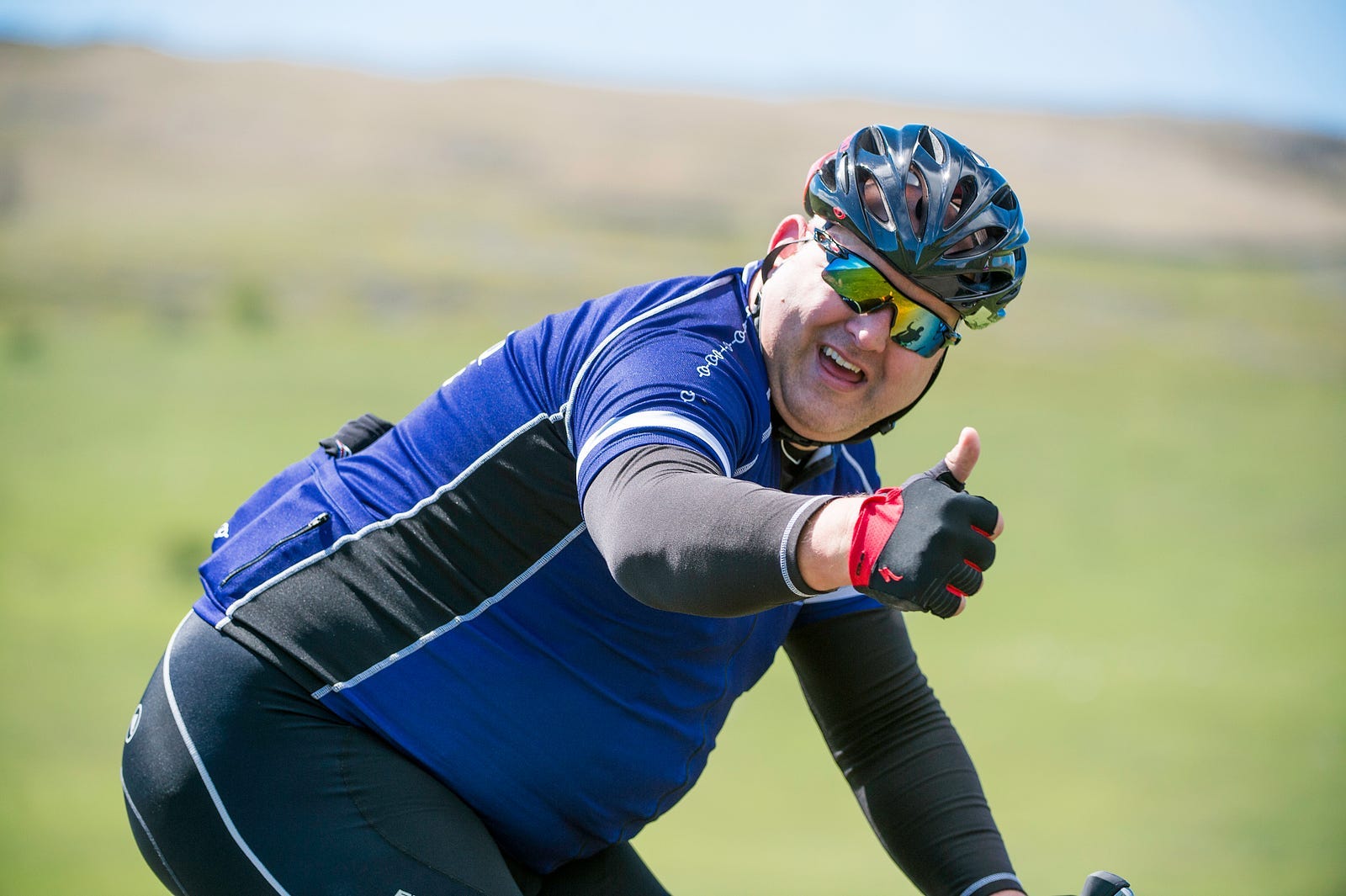
appetitereset.ai
I was sitting in my car at the gas station, sipping a Diet Coke, while my friend pumped gas. As I enjoyed the spring air, I couldn’t help but notice two young men walking towards my car on their way into the convenience store.
As they passed my car, one of them looked at me and muttered “fat ass” loud enough for everyone pumping gas to hear.
Before leaving my sight, his friend let out a chuckle.
When my friend got back in the car, he immediately called them ass holes and with a shocked expression asked me if this was a frequent occurrence. It was. The year was 2009. If you met me for the first time, you saw a 23 year old weighing in at 300 pounds with no intent to shrink.
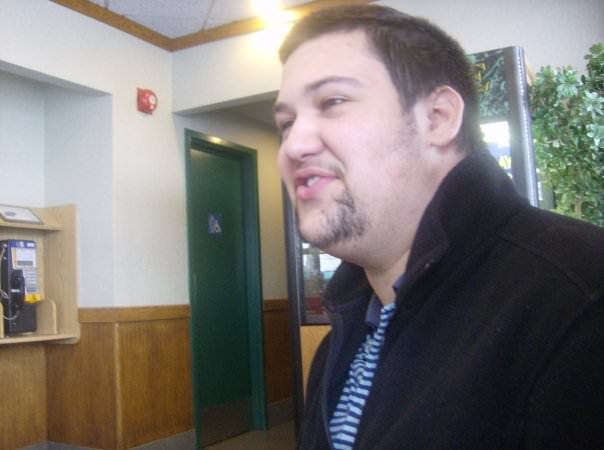
I was not a seven-foot tall athlete. I was sick and lost, and confident I would be that way forever. Even more convinced it was my fault.
From 2006 onward my weight ballooned, and I was not exactly an athlete in years prior. My weight oscillated between 245 and 300 pounds, peaking at 300 in July 2012. My height remained stubborn at six feet even. By Summer 2013, I weighed in at 185 pounds after dropping 115 in 11 months.
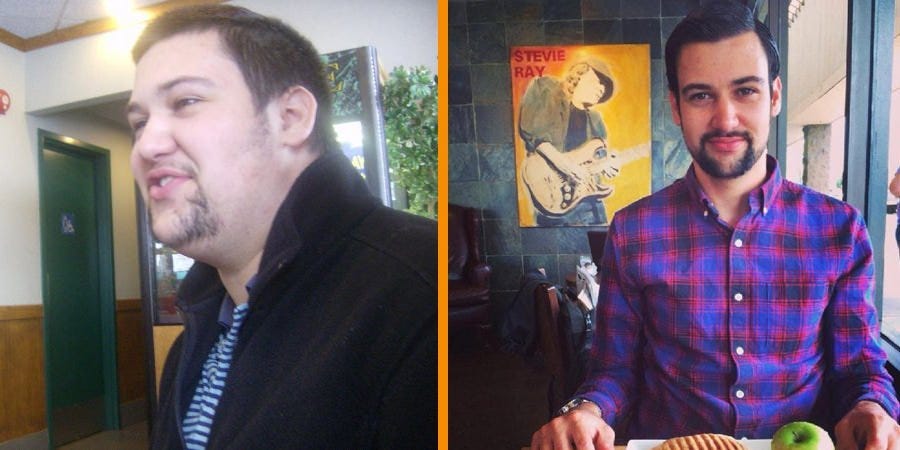
In the years since I have kept it off and pursued more significant physical challenges. Challenges I had never dreamed possible. My journey was challenging, but not in the ways you might think. The emotional and mental aspects were by far the most challenging hills I had to climb. If you are looking for a “lose fat” quick scheme or a routine to blindly follow, my writing will not be your cup of tea.
Before I experienced success, I read and attempted to follow a plethora of bad advice from so-called experts. Mainstream information on weight loss often amounts to weak one-size-fits-all theories and misleading claims by food and health professionals. You are the only one incentivized to improve your health, doctors and fitness gurus are not.
Learning how to listen and understand what your body needs is the most challenging obstacle to losing fat. It took me four years and more than ten failures to start figuring out how my body works. You name the diet or program, and I have likely tried it. Some people go their whole lives without figuring this out.
You assume you are NOT meant to feel and look good, and so you don’t. This is bullshit, you deserve health and happiness as much as anyone else.
Achieving sustainable fat loss will force you to understand the relationship your mind has with your body. There is no shortcut to avoid this step. If you try to skip this step, you can still drop weight and even fat in the short term, but the fat will come back and often in greater quantity. Nature is cruel in this way. Kicking us while we are down.
To identify your optimal fat loss strategy, you will need to explore yourself. You will learn a lot of lessons, and many will surprise you. Today, I am going to share three big ones I learned in hopes they can save you some time and frustration. These lessons together form a synergy that enables efficient fat loss with minimal struggle. Notice I did not say minimal effort. Healthy fat loss should not feel impossible if you are doing what your body needs.
The three unexpected lessons that enabled my fat loss:
Weight Loss = 90% Nutrition + 10% Exercise
Weight Loss is NOT the same as Fat Loss
Fat Loss is MORE of a Mental Challenge than it is Physical
Weight Loss = 90% Nutrition + 10% Exercise
You CANNOT outwork poor nutrition.
Anyone who says you can eat 4000 calories of garbage and have a six-pack if you simply do 37 crunches everyday, is drinking too much cool-aid. Either they don’t have a six-pack or have never had a lot of fat to lose.
I know many marathon runners who are overweight. I also know some who are not. When I run long distances, I experience insatiable hunger making it next to impossible to eat healthy portions. Thus I gain weight. My friends that run long distances who are in good shape have never had excess fat to lose.
That does not mean running is off-limits for fat loss programs, it means you will need to figure out how to make it work with your diet and lifestyle. If you simply start a running program and hope for the best, you will likely be disappointed when the fat does not start falling off.
During my initial 115 pound weight loss, I did not step foot in a gym. I did not work out at all, at least not in the traditional sense. I focused my efforts on dialing in my diet and strengthening my mind. Forgoing exercise is not recommended, but it goes to show you how underpowered it is in comparison to diet when fat loss is the goal.
I am NOT saying exercise is wrong, and I am not suggesting you shun physical activity. Today, I typically work out five days a week and take long walks around Manhattan. Exercise is effective at boosting your mental health, and with the right nutrition can also help you improve your physique.
Exercising itself will not likely lead to a dramatic fat loss unless you accidentally, and consistently, eat an optimal diet. You need to be careful when starting to exercise for the first time or beginning a new regimen.
Your body needs conditioning before it can genuinely benefit from rigorous exercise. The nervous and digestive systems are involved. If you do too much too quickly, it can be easy to throw your diet in the wrong direction, and experience adverse health issues.
Think of physical activity as a lever that can enhance your fat loss efforts. A way to uplift your mind and get the most out of the food you eat. Never underestimate the ability of an excellent workout to curb unhealthy cravings and emotional eating. Your workout will not make up for the donut you ate this morning, but it could prevent you from making the same mistake tomorrow.
There is no one size fits all diet nor exercise that is optimal for everyone. Keto is what works for me, but it doesn’t work for everyone, and I do not follow the exact keto diet you may know. Within the keto framework, I had to find what works for me and leave out several things that work well for many others.
The health “experts” know that everyone desperate to lose weight is looking for a quick fix, and many of these “fixes” will indeed show fast progress. The boomerang back to your previous or an even higher body fat % is often even quicker. Finding the optimal nutrition plan is an iterative process and future article all on its own. Your diet will not likely be short-term, and mine is lifelong because it still works for me long after losing the fat. I do make small tweaks now and then as I learn.
Weight Loss is NOT the same as Fat Loss
Why do I keep mentioning “fat loss” and not weight loss or fitness? Because I don’t give a shit about a number on a scale, and you shouldn’t either. I want to live and feel good.
Feeling good and living long when you are massively overweight means losing fat regardless of what the stupid scale says on any given day. You aren’t interested in losing water and muscle or feeling the same way you do today but with a smaller number on the scale. Those outcomes are common and easy to achieve. They will not improve your health, nor will they make you feel and look better in the long-term.
But Ben, you reference your 115 pound weight loss in this very article WTF!? Yes, yes I did, and I will tell you why. Our society understands weight better than body fat %. Perhaps because most people cannot efficiently and accurately measure their body fat %.
I am not telling you never to weigh yourself or bring up your weight in conversation or you’re out of the band! If you set a weight loss goal make sure your goal is realistic and healthy. By definition, this kind of goal will involve more than chasing the number on your scale.
Weight by itself is a lousy proxy for health, but you can obtain a more accurate picture with a few additional metrics. For example, take note of when you need new clothes. When you are on the right track, fat loss tends to ebb and flow, coming in waves, rewarding our persistence.
Humans tend to expect and desire a linear process where success is roughly proportional to effort. Healthy weight loss and gain (e.g. muscle) do not typically work this way. One day you are frustrated because you still feel fat despite your efforts, and the next day you think differently and weigh less. It is a trip!
Fat Loss is MORE of a Mental Challenge than it is Physical
Sustainable fat loss is even more of an emotional and mental challenge than it is physical. I know exactly how it feels to stare down at my vast body and roll my eyes when someone tells me some cliche “the journey is mental” BS, likely stolen from a poster in a guidance counselor’s office. I am asking you to hear me out. I thought it was BS too. It turns out it is 100% true.
Your mind is in control of your body, and with some awareness and patience, you can learn to ask your body to do other things…healthy things.
The emotional aspect takes many forms. For starters, fat retention, binge eating, food addiction, etc. are all triggered by signals in your brain. Becoming aware of these emotions and triggers will start to reduce their powers. Yoga and other forms of mindfulness are excellent tools to increase your self-awareness, boost your mood, and teach you how to move in ways to nurture your goals.
Losing fat and moving your body in new ways will also release emotional baggage stored in your body. You may think this sounds insane or impossible, but I have never met someone that has achieved extreme fat loss and NOT experienced many mental roller coaster rides along the way. It is INEVITABLE.
Someday, I will tell you about the time I tried a hip-opener yoga routine and spent the rest of the day recalling painful memories from childhood! Your mind matters most.
Thank you for reading! I would love to hear from you.
If you enjoyed this article and need help on your journey checkout my new AI coach at appetitereset.ai for a 24/7 support system to help you lose fat, cut cravings, retain or even gain muscle, without cutting calories!