
Breaking a sugar addiction is tough, but it’s achievable with the right approach. Sugar impacts your brain like addictive substances, making it hard to resist. On average, Americans consume 22–30 teaspoons of added sugar daily - far above recommended limits. Cutting back can improve energy, sleep, focus, and reduce risks of diabetes, heart disease, and more.
Here’s how you can take control:
Understand triggers: Emotional stress, habits, or even hidden sugars in foods can drive cravings.
Clean out sugary foods: Remove temptations like soda, candy, and processed snacks from your kitchen.
Manage withdrawal: Symptoms like headaches and fatigue peak within 2–5 days but fade after a few weeks. Stay hydrated, eat protein, and get enough sleep.
Choose better options: Replace sugary drinks with water or unsweetened tea and swap snacks for protein-rich and fiber-filled alternatives.
Build balanced meals: Combine protein, fiber, and healthy fats to stabilize blood sugar and reduce cravings.
Adopt healthy habits: Regular movement, proper sleep, and mindful eating help control cravings long-term.
Setbacks happen - use them as learning moments. Tools like Appetite Reset can provide real-time support to stay on track. With patience and consistency, you can reduce sugar dependency and build healthier habits.

6-Step Guide to Breaking Sugar Addiction
Step 1: Recognize Sugar Addiction and Find Your Triggers
What Is Sugar Addiction?
Sugar addiction works a lot like substance dependency. When you eat sugar, your brain releases dopamine and endorphins - those feel-good chemicals that create a natural high. That’s why you keep coming back for more. Beth Czerwony, RD, LD, from Cleveland Clinic, explains it perfectly:
“Sugar activates the reward and pleasure centers of our brains the same way addictive substances do.”
Over time, your brain adjusts to the constant flood of dopamine by reducing receptor availability. This means you need more sugar just to feel the same “reward”, locking you into a cycle of highs and lows. Signs of sugar addiction can show up in your behavior, like eating sweets even when you’re not hungry, losing control over portion sizes, hiding your sugar stash, or going out of your way to get sugary treats. Physically, you might notice strong cravings, shakiness after a sugar crash, bloating, or frequent headaches. And if you’ve tried cutting back, feelings of irritability or mental fog might sound familiar - they’re withdrawal symptoms, similar to those seen with other addictive substances.
How to Find Your Triggers
Recognizing that you’re hooked on sugar is the first step. But understanding why you reach for it is just as important. Triggers generally fall into four main categories:
Emotional: Stress, anxiety, or loneliness might send you straight to the cookie jar.
Environmental: Think office candy bowls or the tempting smell of a bakery as you walk by.
Habitual: Grabbing dessert after every meal or reaching for sweets during your afternoon slump.
Physical: Skipping meals, poor sleep, or even nutrient deficiencies can make your body crave sugar.
Tracking your habits can help you pinpoint these triggers. Beth Czerwony emphasizes:
“We can manage what we monitor. If we don’t realize what we’re doing, we can’t manage it.”
Start with a food journal. Write down what you eat, when you eat it, and how you’re feeling at the time. For instance, do you find yourself craving sweets after a stressful meeting or during a mid-afternoon energy dip?
Another helpful tool is the “Apple Test.” Ask yourself: Would I eat an apple right now? If the answer is no, you’re probably dealing with a craving, not genuine hunger. Also, keep an eye out for hidden sugars in packaged foods. Manufacturers often sneak them in under names like maltose, agave nectar, or evaporated cane juice.
Once you’ve identified your triggers and patterns, you’ll have a clearer idea of where to focus your efforts. These insights will prepare you for the next step: cutting back on sugar and managing withdrawal symptoms.
Step 2: Remove Sugar and Prepare for Withdrawal
Clean Out Your Kitchen
Once you’ve identified your triggers, the next step is to eliminate sugary temptations from your home. Go through your pantry, fridge, and freezer, and get rid of obvious offenders like cookies, candy, ice cream, and soda. Shockingly, about 80% of processed foods contain added sugar. These sugars often hide in foods you might not expect.
Take a closer look at condiments, sauces, and even items marketed as “healthy.” For instance, just 2 tablespoons of barbecue sauce can contain up to 9 grams of sugar. Other common culprits include tomato sauce, salad dressings, flavored yogurts, granola bars, and even whole wheat bread. Low-fat products are particularly sneaky - manufacturers often replace fat with sugar to maintain flavor. As Dr. Michelle Hauser from Harvard Medical School explains:
“When companies take out the fat, they add back almost all the calories in sugar.”
Pay attention to labels. If sugar or any of its many aliases - like high fructose corn syrup, agave nectar, evaporated cane juice, or maltodextrin - shows up in the first five ingredients, it’s best to remove that product. If throwing food away feels wasteful, think of it as clearing harmful substances from your life. Once your kitchen is free of sugary distractions, set a firm start date for your detox.
Pick a Start Date
Choose a start date for your sugar detox and mark it on your calendar. Treat this as a serious commitment, like any other major life change. Avoid starting during particularly stressful times, such as a big work deadline, the holidays, or other major events. Before your detox begins, stock up on whole foods like eggs, lean meats, avocados, nuts, and non-starchy vegetables. Preparing four days’ worth of sugar-free meals in advance can help you avoid impulsive choices.
Manage Withdrawal Symptoms
Be prepared for withdrawal symptoms to hit their peak within 2–5 days, though they typically fade after 1–4 weeks. Symptoms might include headaches, fatigue, nausea, irritability, anxiety, or brain fog. As Christine Gerbstadt, MD, points out:
“The initial 48 to 72 hours are tough.”
Hydration is key - drink plenty of water to help with headaches and support your body’s detox process. Nutritionist Brooke Alpert, RDN, suggests cold drinks like unsweetened iced tea or sparkling water with lime to curb sugar cravings.
Make sure to eat meals rich in protein and fiber - such as eggs, Greek yogurt, beans, nuts, and vegetables - to stabilize your blood sugar and keep you feeling full. Eating every 3–5 hours can prevent extreme hunger and impulsive eating. Additionally, aim for 7–9 hours of sleep each night, as sleep deprivation can disrupt hunger hormones and intensify cravings. Light physical activity, like walking or yoga, can also help reduce stress and alleviate withdrawal symptoms.
Sugar Withdrawal Symptoms & How to Manage Them:
Headaches — Drink more water and ensure you’re getting enough electrolytes. I recommend LMNT to make it easy! However if you want to save money you can mix ¼ teaspoon Redmond Real Salt, ½ teaspoon potassium chloride, 2 teaspoons magnesium powder supplement in 12 ounces of water. You can add a tsp of Apple Cider Vinegar for a small boost to metabolism.
Fatigue/Low Energy — Start your day with protein to prime metabolism and stabilize blood sugar.
Intense Cravings — Eat balanced meals every 3–5 hours; include healthy fats like avocado.
Irritability/Mood Swings — Try light physical activities like walking or yoga.
Brain Fog — Get 7–9 hours of sleep to regulate appetite and energy hormones.
Step 3: Switch to Healthier Food Options
Replace Sugary Drinks
Sugary drinks are a major source of added sugar in the American diet, contributing nearly 25% of total intake. To put it into perspective, a single 12-ounce can of soda contains about 10 teaspoons of sugar and 155 calories. Dropping just two sodas a day could cut around 2,100 calories from your weekly intake [23,24].
For hydration, plain water is your best bet. If plain water feels too boring, jazz it up with natural flavors like lemon, lime, cucumber, berries, or even fresh basil. Craving bubbles? Go for sparkling water or seltzer instead of sugary sodas. You can also make a simple mocktail by adding a splash of 100% fruit juice to sparkling water for a refreshing twist.
Unsweetened tea and coffee are also excellent alternatives. Whether you prefer them hot or iced, you can skip the sugar and add a drop of vanilla, almond, or orange extract for a hint of flavor [23,26]. When grabbing coffee on the go, avoid flavored syrups and whipped cream. Instead, opt for low-fat milk or unsweetened milk alternatives.
If cutting out sugary beverages feels overwhelming, try easing into it. For example, mix sweetened and unsweetened iced tea, gradually increasing the unsweetened portion over time. Dr. Michelle Hauser from Harvard Medical School suggests that artificial sweeteners can act as a temporary bridge for some:
“For people who are trying to make small changes to their diet, artificial sweeteners are sometimes a good stepping stone, but they’re not a permanent fix.”
Once you’ve tackled sugary drinks, the next step is to rethink your snacks.
Pick Better Snacks
Making better snack choices is key to managing cravings and building long-term habits. The best snacks for reducing sugar cravings combine fiber-rich carbs, lean protein, and healthy fats [28,29]. Anna Taylor, a registered dietitian at Cleveland Clinic, offers this advice:
“For every snack, you should choose a fiber‑rich carbohydrate with either a lean protein or a healthy fat.”
Instead of grabbing a candy bar or cookies, try these alternatives:
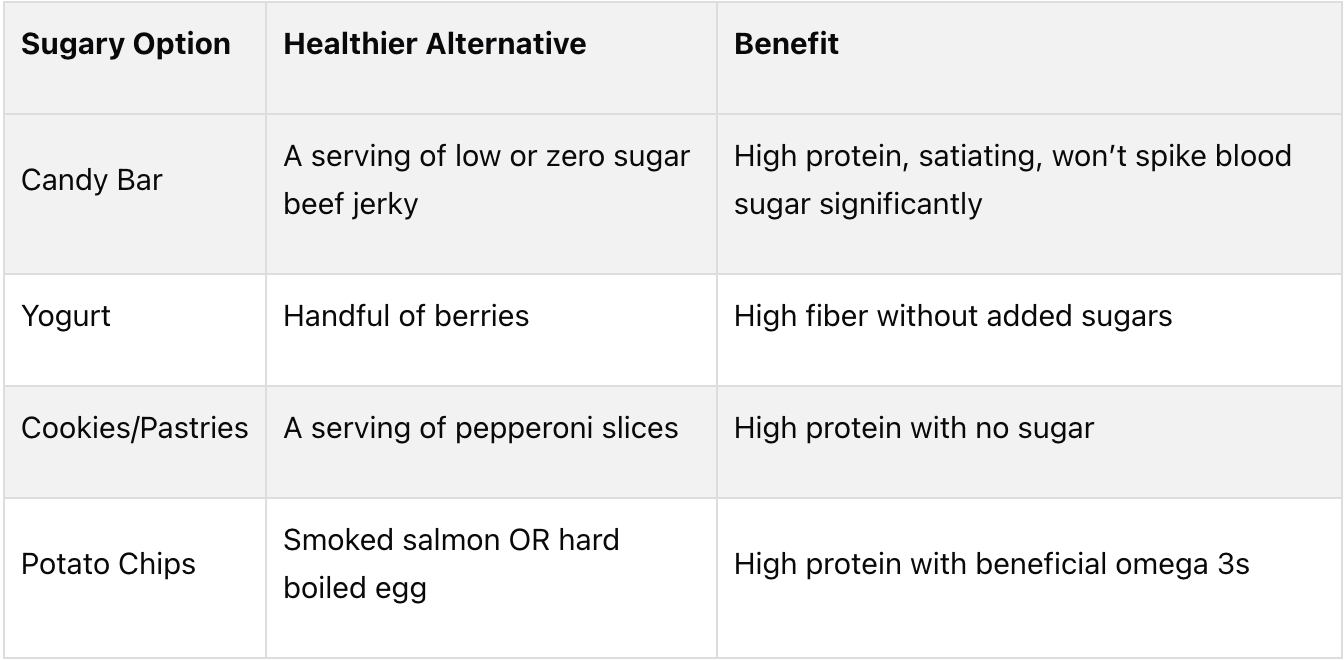
Keep healthy snacks visible and easy to grab. Prepping snacks and meals ahead of time can make a big difference when cravings strike. Over two to four weeks of reducing sugar, your taste buds will adapt, making naturally sweet foods like fruit taste even better.
Step 4: Create Balanced Meals and Control Cravings
Build Balanced Meals
Once you’ve made the switch to healthier options, the next step is to focus on creating meals that are balanced and satisfying. The key is to combine protein and healthy fats in every meal. Why? This helps stabilize blood sugar levels, keeps you feeling full longer, and reduces those pesky cravings. As Dr. Christina Propst explains:
“Protein and healthy fats are three of the most effective nutrition levers because they work across ages, lifestyles, and goals.”
A simple way to achieve this is by using the Plate Method. Picture a 9-inch plate: fill half with non-starchy vegetables, one quarter with lean protein like beef or chicken, and the remaining quarter with unprocessed carbohydrate-rich foods but you can also skip the carbs as they are not required by our bodies for anything.. And here’s a pro tip: if you’re going to eat carbs never eat carbs on their own. Pair them with protein or fat to slow digestion and avoid blood sugar spikes.. Another pro tip: eat protein first meal of the day and first thing you eat in every meal and snack. Protein is more satiating, hard to overeat, and primes your metabolism!
Timing your meals is another important factor. Eating every 3 to 5 hours can help prevent extreme hunger, which often leads to overeating or sugar binges. For portion control, try the Hand Method: your palm equals around 3 ounces of meat, your fist represents about one cup of fruits or veggies, and a cupped hand is roughly 1 to 2 ounces of nuts. Finally avoid eating within 2-3 hours of bedtime, digesting food while you sleep hinders your sleep quality and affects your metabolism during the hours you are awake.
Use AI Support
Even with balanced meals, cravings can sneak up on you. That’s where timely support makes all the difference. Real-time tools can help you manage those cravings the moment they hit. For instance, Appetite Reset offers 24/7 AI-powered coaching designed to address cravings as they happen. This service doesn’t just help you decide whether you’re actually hungry - it also identifies emotional triggers like stress or boredom and provides actionable advice.
As you work toward building lasting habits, AI support can be a game-changer. Appetite Reset uses daily check-ins and progress tracking to learn your unique patterns and triggers. It delivers personalized guidance to help you stay on track, whether it’s advice on crafting balanced meals, understanding the root of your cravings, or navigating challenging moments. This consistent, tailored support ensures your nutritional and emotional needs are met every step of the way.
How to Break Sugar Addiction in 30 Days [The Rules]
Step 5: Make Long-Term Lifestyle Changes
Breaking free from sugar isn’t just about cutting certain foods - it’s about reshaping your daily habits. By focusing on movement, sleep, hydration, and mindfulness, you can create a strong foundation that helps regulate the hormones driving cravings while building resilience against triggers.
Add Daily Movement
Exercise is an effective way to curb sugar cravings. Physical activity releases dopamine and boosts brain-derived neurotrophic factor (BDNF), which together help reduce cravings. Combined with improved nutrition, regular movement strengthens your commitment to staying sugar-free.
The best part? You don’t need to spend hours sweating it out. A simple 15-minute brisk walk can make a difference. A March 2015 study published in PLOS ONE examined 47 overweight participants who had a habit of consuming sugary snacks. After abstaining from sugar for three days, they took a 15-minute brisk walk. The results showed a significant reduction in their reported cravings, even when stress or environmental triggers were present.
“Move a muscle, change a thought.” - Dr. Austin Slade, Clinical Psychologist, Sharp McDonald Center
The key is to pick activities you genuinely enjoy - whether that’s yoga, dancing, gardening, or a morning stroll. Even starting your day with just 10 minutes of movement can stabilize your energy and mood. When cravings hit, try a “micro-workout” like a quick 10- to 15-minute walk or light stretching. Exercise also lowers ghrelin (the hunger hormone) and reduces cortisol, the stress hormone, both of which can drive sugar cravings.
Prioritize Sleep and Water Intake
Lack of sleep can amplify sugar cravings. Sleep deprivation increases ghrelin, the hormone that makes you feel hungry, while reducing leptin, the hormone that signals fullness. This imbalance leaves you reaching for quick energy fixes like sweets.
“When you’re sleep deprived, ghrelin, your hunger hormone, ramps up, while leptin, the hormone that tells you that you’re full, dips.” - Kristina Freshour Hartman, Registered Dietitian, Northwell Health
Aim for 7 to 9 hours of quality sleep each night. To improve sleep, keep your bedroom cool (65°F to 68°F), dark, and quiet. Try to wake up at the same time each day, even on weekends, to regulate your circadian rhythm. Develop a bedtime routine - spend 30 to 60 minutes winding down with screen-free activities like reading, stretching, or deep breathing. Avoid heavy meals close to bedtime and cut back on caffeine after lunch.
Hydration is equally important. Sometimes, your brain confuses thirst with hunger or sugar cravings. Drinking water can help dilute concentrated sugar in your bloodstream, reducing blood sugar spikes and dips that trigger cravings. Next time a craving strikes, drink a glass of water and wait 10 to 20 minutes - it might fade away. Replace sugary drinks like sodas and juices with plain or sparkling water. If you miss flavor, try infusing your water with fresh fruit or herbs.
“If we have concentrated sugar in our bloodstreams, you can dilute that down with the water. That will help reduce blood sugar peaks and valleys, which, in turn, helps keep cravings managed.” - Beth Czerwony, RD, LD, Cleveland Clinic
Better sleep and hydration habits set the stage for mindful eating, which can further help manage cravings.
Practice Mindful Eating
Mindful eating is all about slowing down and paying attention to what you’re eating - and why. It helps you separate genuine hunger from emotional cravings. Avoid eating while distracted. Instead, take time to notice the flavors, textures, and sensations of your food.
After physical activity, ask yourself if you’re truly hungry or just eating out of habit. Cravings often pass within 20 minutes if you redirect your focus - take a walk, change your surroundings, or engage in a different activity.
Mindfulness isn’t about being perfect; it’s about being present. The more you tune into your body’s signals, the easier it becomes to make choices that align with your long-term goals rather than giving in to fleeting impulses.
Step 6: Stay Consistent and Recover from Setbacks
Prepare for Setbacks
Slip-ups happen to everyone; the key is how you respond. It’s easy to fall into the “what-the-hell effect”, where one indulgence spirals into completely abandoning your goals. Instead, think of setbacks as learning opportunities.
“A slip-up isn’t a disaster; it’s just a data point. It’s a totally normal part of changing your habits.” - StopSugar
When you find yourself off track, try the Next Meal Rule: don’t overcompensate by skipping meals or over-exercising. Instead, focus on your next meal - make it balanced with protein, fiber, and healthy fats to help stabilize your blood sugar. Then, take a moment to identify what led to the slip-up. Was it stress? Lack of sleep? Social pressure? Understanding the trigger can help you adjust your approach moving forward.
Another helpful tool is the HALT Method: pause and ask yourself if you’re Hungry, Angry, Lonely, or Tired. Often, sugar cravings are your body signaling a need for something else - like rest, emotional support, or proper nourishment. Addressing the real issue can help you break the craving cycle.
Celebrate your progress by rewarding yourself with non-food treats after hitting milestones, like a week without sugar. These small incentives can keep you motivated as you move forward.
Get Continued Support from Appetite Reset
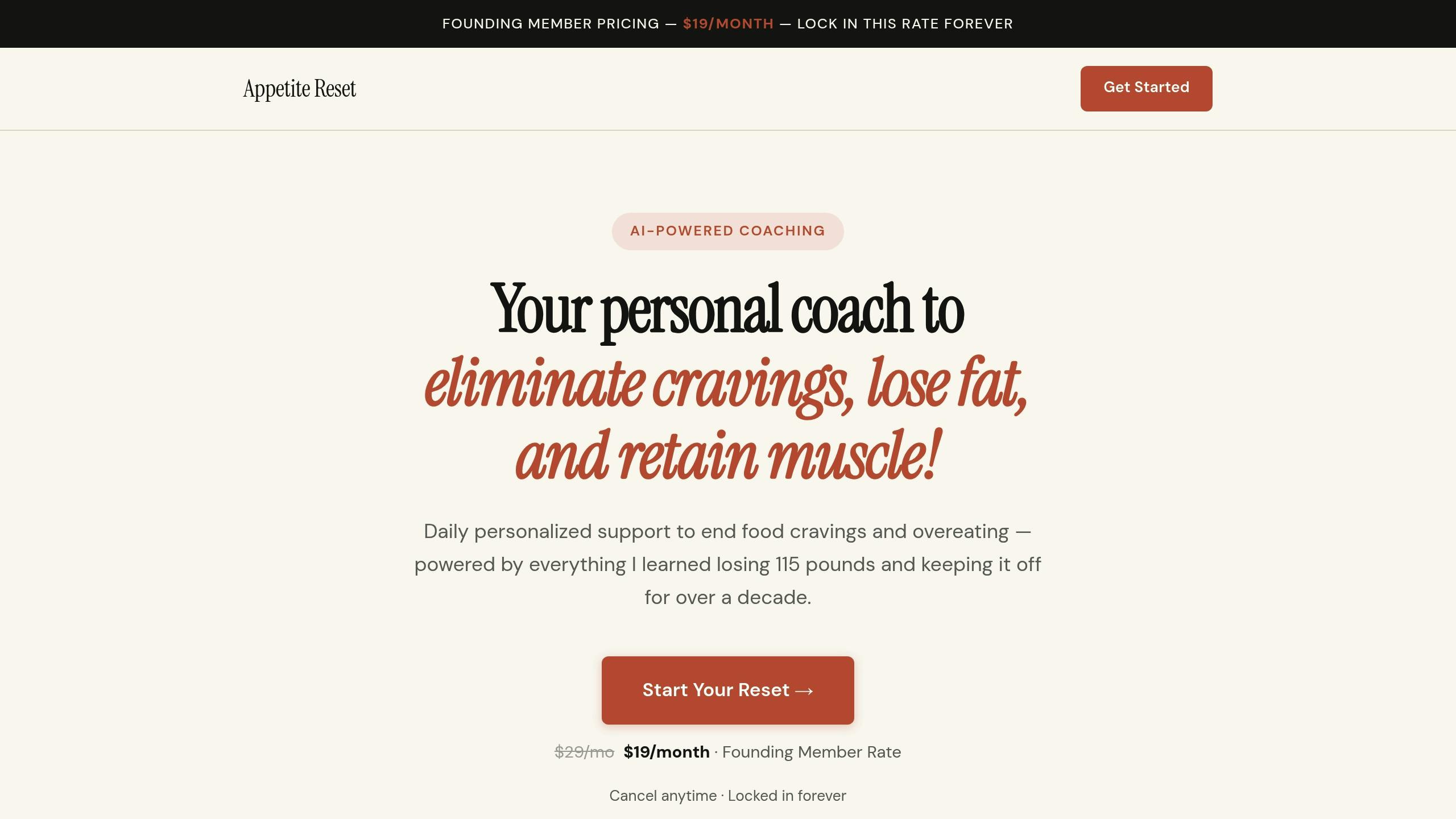
Staying consistent is much easier when you have the right support system in place. Appetite Reset offers 24/7 AI-powered coaching designed to help you manage cravings, recognize patterns, and recover from setbacks. With daily check-ins and progress tracking, the service helps you identify the root causes of cravings - whether it’s tied to specific times, emotions, or situations.
This personalized guidance is tailored to your unique challenges, offering real-time strategies to resist cravings and stay on track. When a craving hits, you can access instant support to help you push through instead of giving in. For founding members, the service is available for just $19/month (regular price $29/month), providing ongoing accountability and practical tools to help you succeed - even on tough days.
Conclusion
Take charge of your habits by putting the steps outlined above into action. Identify your triggers, remove temptations, and focus on meals that truly nourish your body instead of relying on empty calories.
Consistency is key when blending these strategies into your daily life. Aim for 7–9 hours of sleep, stay hydrated, incorporate movement into your day, and practice mindful eating to help balance the hunger hormones that make sugar cravings so challenging. It generally takes about four weeks for both your taste buds and brain chemistry to adjust. As Dr. Michelle Hauser from Harvard Medical School notes:
“When you get used to eating fewer super-sweet things, you crave them less. You become more satisfied with less sweet things”.
Remember, progress isn’t always a straight line. Use setbacks as learning opportunities rather than reasons to give up. Rewiring habits built over years takes time, so be patient with yourself.
To help you stay on track, consider using Appetite Reset, a service designed to provide real-time support, identify patterns, and keep you accountable. Founding members can subscribe for just $19/month (regular price $29/month) and get personalized guidance whenever they need it. Having the right tools and support can be the difference between temporary change and lasting success.
FAQs
How can I spot hidden sugars in packaged foods?
To find hidden sugars in packaged foods, start by carefully examining the ingredients list on the label. Keep an eye out for terms like syrups (e.g., corn syrup, rice syrup), anything ending in “-ose” (like fructose, sucrose, maltose, or dextrose), or names such as cane sugar, raw sugar, and brown sugar.
Next, check the “Added Sugars” section on the Nutrition Facts panel. This part reveals how much sugar was added during processing, giving you a clearer picture of the product’s sugar content. Being mindful of these details can help you cut back on sugar and make healthier food choices.
What are the best ways to handle sugar withdrawal symptoms?
Managing sugar withdrawal symptoms doesn’t have to feel overwhelming. One effective approach is to reduce sugar intake gradually rather than eliminating it abruptly. This can ease the intensity of cravings and help stabilize your mood. Pair this with a nutrient-rich diet that includes plenty of protein and healthy fats, to maintain steady blood sugar levels. Planning your meals ahead and sticking to regular eating times can also help you stay on track.
Stress can be a major trigger for cravings, so incorporating stress-relief practices like mindfulness or deep breathing exercises is a smart move. Equally important is prioritizing quality sleep - lack of rest can amplify withdrawal symptoms and make sugar cravings harder to resist. By staying consistent and patient, these strategies can support a smoother path toward healthier habits.
How does exercise help curb sugar cravings?
Exercise plays a key role in curbing sugar cravings by influencing the brain’s reward system, which drives both cravings and pleasure-seeking behaviors. Regular physical activity - especially aerobic exercises - helps regulate dopamine levels, the neurotransmitter tied to the brain’s reward circuits. This balance can make it easier to say no to sugary foods.
Beyond its impact on brain chemistry, exercise also improves mood, reduces stress, and increases energy. These benefits tackle some of the most common reasons people reach for sugar, like stress or the need for an energy boost. Over time, staying active can help build healthier habits and decrease the reliance on sugar for quick fixes.