
Want to lose fat but keep your muscle? The key is balancing nutrition, exercise, and recovery. Here’s how you can do it:
Eat More Protein: Aim for 1.6–2.2 g/kg of body weight daily. Spread it across meals to boost muscle protein synthesis.
Lift Weights: Strength training 2–3 times a week signals your body to hold onto muscle.
Moderate Calorie Deficit: Stick to 300–500 fewer calories per day. Avoid aggressive cuts to prevent muscle loss.
Add Cardio Wisely: Use low-impact exercise such as walking or HIIT cardio in short sessions to burn fat without draining recovery.
Distribute Protein Intake: Eat 20–40g of protein per meal to maximize muscle repair.
Focus on Vitamins & Minerals: Nutrients like Vitamin D and chromium support muscle retention and fat loss.
Improve Insulin Sensitivity: Resistance training, protein-rich meals, and post-meal walks can help.
Sleep & Hydration: Get 7–9 hours of sleep and drink 2–3 liters of water daily to support recovery.
Prioritize Lean Proteins: Chicken, fish, tofu, and Greek yogurt provide muscle-friendly protein with fewer calories.
Track Progress: Use DEXA scans, strength logs, and waist measurements to monitor fat loss vs. muscle loss.
Takeaway: A steady calorie deficit, high-protein diet, and consistent strength training are your best tools for losing fat while preserving muscle. Avoid crash diets and overtraining, they’ll cost you muscle and slow your metabolism. Combine these strategies for lasting results.

Protein Requirements for Fat Loss and Muscle Preservation by Population Group
1. Eat Enough Protein Every Day
Effectiveness for Fat Loss and Muscle Preservation
Protein plays a key role in protecting muscle during a calorie deficit. It provides essential amino acids that stimulate muscle protein synthesis (MPS) and reduce muscle protein breakdown. Without sufficient protein, your body might start breaking down muscle tissue to meet energy demands.
It also aids fat loss by increasing feelings of fullness through gut hormones like CCK and peptide YY. Plus, protein has a thermic effect, meaning your body burns about 10% more calories digesting it compared to other macronutrients.
Scientific Evidence Supporting the Method
The standard Recommended Dietary Allowance (RDA) for protein is 0.8 g/kg (0.36 g/lb) of body weight, is just enough to prevent deficiency but falls short when it comes to supporting fat loss and muscle preservation. Research suggests that consuming over 1.3 g/kg/day is necessary to prevent muscle loss during a calorie deficit.
Take, for instance, a 2016 study from McMaster University. Over four weeks, 40 young men followed a 40% calorie deficit. Those in the higher-protein group (2.4 g/kg/day) lost 4.8 kg of fat and gained 1.2 kg of lean mass. In contrast, the lower-protein group (1.2 g/kg/day) lost 3.5 kg of fat and gained only 0.1 kg of lean mass. Similarly, high-protein diets (1.1–1.6 g/kg) have been shown to help individuals retain about 0.5 kg more lean body mass than diets with standard protein levels (0.6–0.8 g/kg) during weight loss.
These findings highlight the importance of setting practical protein targets based on lifestyle and goals.
Feasibility for Readers to Implement
To determine your protein needs, consider your weight and activity level. For most active people, aim for 1.6 to 2.2 grams per kilogram (0.7 to 1.0 grams per pound). If you’re over 50, aim for at least 1.2 to 1.6+ g/kg to help counteract muscle loss associated with aging.
Spread your protein intake across 4–5 meals for better absorption and muscle recovery. Focus on lean sources like chicken breast, white fish, Greek yogurt, egg whites, and legumes. After resistance training, aim for around 40 grams of protein to maximize recovery benefits.
Sustainability Over Time
“Protein requirements during fat loss are significantly higher than during maintenance phases.” - The BodySpec Team
For healthy individuals, consuming protein above the RDA is safe, as the kidneys adapt naturally to higher intakes. Pairing protein with high-fiber foods like beans and vegetables can further enhance satiety, making it easier to maintain a calorie deficit over the long term. By meeting your protein needs and incorporating balanced meals, you’ll set yourself up for sustainable fat loss and muscle preservation.
2. Lift Weights Regularly
Effectiveness for Fat Loss and Muscle Preservation
Resistance training sends a clear message to your body: keep the muscle, burn the fat. Without it, up to 25% of the weight you lose could come from muscle instead of fat. And losing muscle doesn’t just affect your strength, it slows your metabolism, making it harder to keep the weight off in the long run.
Weightlifting also supports “body recomposition”, where you lose fat while maintaining or even gaining muscle. A study from Tel Aviv University tracked 304 adults on a 500-calorie deficit. Those who lifted weights 2–3 times per week gained lean mass, men added 0.8 kg, and women added 0.9 kg of muscle. Meanwhile, participants who skipped resistance training lost muscle, 2.8 kg for men and 1.66 kg for women. Remarkably, 85% of those who lifted weights gained lean body mass, compared to just 50% of those relying only on cardio.
Scientific Evidence Supporting the Method
Research backs the idea that resistance training can preserve up to 93.5% of muscle mass during calorie restriction. The secret? Keep your training intensity high, even when eating fewer calories. Heavy lifting gives your muscles the stimulus they need to stay put.
Feasibility for Readers to Implement
Pair weightlifting with enough protein, and you’ll amplify muscle preservation. Start with 2–3 sessions a week, targeting each major muscle group at least twice. Aim for 10–20 sets per muscle group weekly. Focus on compound exercises like squats, deadlifts, bench presses, and rows. These moves work multiple muscle groups at once, making your workouts more efficient. Use weights that let you complete 8–12 reps per set, around 60–80% of your one-rep max.
If you’re in a calorie deficit, prioritize exercises that activate your muscles without overloading your joints. For instance, swap heavy barbell deadlifts for chest-supported rows or goblet squats. Rest each muscle group for 48–72 hours between sessions, and gradually increase the weight or reps by small increments (2–5 pounds) to keep challenging your body. Combined with proper nutrition, this plan helps you lose fat while keeping your hard-earned muscle.
Sustainability Over Time
“Muscle is like the high-performance engine of your body. The more muscle you have [from resistance training], the more calories your body naturally burns, even while you’re kicking back on the couch.” - Montel Hardin, Certified Personal Trainer and Founder, Hardin Athletix
Resistance training doesn’t just help you lose fat now it sets you up for long-term success. Every 6–8 weeks, take a break from intense training by reducing your workout volume and eating at maintenance calories. This recovery period, paired with a steady protein intake, creates the perfect conditions for keeping muscle while losing fat.
3. Create a Moderate Calorie Deficit
Effectiveness for Fat Loss and Muscle Preservation
The size of your calorie deficit plays a big role in determining whether you lose fat or muscle. If you cut calories too drastically, your body may start breaking down muscle for energy. A moderate deficit of 300–500 calories per day strikes a balance, allowing fat loss while maintaining muscle protein synthesis and workout performance. This approach works hand-in-hand with a high-protein diet and resistance training to help you keep your hard-earned muscle.
On the flip side, aggressive deficits, anything over 750 calories a day, can increase cortisol levels and lower testosterone, creating conditions that speed up muscle loss. A moderate deficit typically leads to losing about 1 pound per week (or 0.5–1% of your body weight), which is a sustainable pace. For beginners or those with higher body fat, a smaller deficit of 200–300 calories can even lead to fat loss while building muscle.
Scientific Evidence Supporting the Method
Studies show that for every 100 calories added to your deficit, the ability to gain lean muscle decreases slightly, by about 0.031 units. A deficit of around 500 calories per day is enough to completely halt lean mass gains. Without strategies like resistance training and moderate calorie reductions, 20–40% of the weight lost during a diet could come from fat-free mass, including muscle. Since muscle burns roughly 6 calories per pound per day at rest, losing muscle during weight loss can significantly impact your metabolism.
Feasibility for Readers to Implement
Applying a moderate calorie deficit is straightforward. Start by calculating your Total Daily Energy Expenditure (TDEE), then subtract 300–500 calories. If you’re losing more than 1% of your body weight per week, your deficit might be too large, adjust accordingly. Keep an eye on your gym performance; if your strength consistently drops, it’s a sign that your deficit may be too aggressive.
To make this approach even more manageable, you can alternate between deficit days (lasting 3–7 days) and maintenance days (2–5 days). This strategy helps replenish glycogen stores and reduces diet fatigue. Additionally, taking a 1–2 week break at maintenance calories every 8–12 weeks can help restore your energy and improve training performance.
Sustainability Over Time
“A moderate deficit of 200–300 kcal/day can still allow for strength progression and even modest hypertrophy when paired with progressive overload training.” - BodySpec Team
Maintaining a moderate calorie deficit is key for long-term success. A deficit smaller than 300 calories might slow your progress, while going beyond 750 calories increases the risk of muscle loss. Staying in the middle range ensures fat loss without sacrificing muscle, making it a sustainable approach for reaching your fitness goals. Combined with a high-protein diet and consistent strength training, this method helps protect your muscle while shedding fat, setting you up for lasting results.
4. Add Cardio Without Overdoing It
Effectiveness for Fat Loss and Muscle Preservation
Once you’ve established a routine of resistance training and a moderate calorie deficit, adding cardio can help accelerate fat loss without sacrificing muscle. Cardio works by increasing your calorie burn, but it should always complement not replace your strength training. Overdoing cardio, especially high-impact activities like running, can lead to fatigue that hinders recovery and muscle growth as well as increased hunger. Instead, opt for low-impact options like cycling, incline walking, or using an elliptical. Walking around your neighborhood or on a treadmill for 30-60 minutes is a greta way to burn calories mostly from fat without increasing hunger signals! All of these methods are easier on your muscles and conserve energy for your strength sessions.
One study highlighted the benefits of combining cardio with resistance training: participants lost around 16 lbs of fat while gaining 10 lbs of muscle. In contrast, a cardio-only group experienced a 5% loss in lean mass, compared to just 2–3% in groups focused on strength training. Additionally, research shows that aerobic sessions exceeding 30 minutes can negatively affect muscle strength more than shorter workouts.
Scientific Evidence Supporting the Method
A 2024 meta-analysis reviewing 59 studies with over 1,300 participants revealed that higher cardio volumes and longer durations often reduce strength and muscle size gains, particularly in the lower body. This phenomenon, known as the “interference effect”, occurs because excessive cardio depletes glycogen, raises cortisol levels, and increases recovery demands, all of which compete with muscle-building processes.
“The more cardio an individual performs and the longer the duration of each session, the more it interferes with muscle size and strength gains.” - Jeremy Ethier, Founder, Built With Science
High-Intensity Interval Training (HIIT) is an efficient way to burn fat while preserving muscle, but it should be limited to 1–2 sessions per week, each lasting 10–20 minutes, to avoid overloading your central nervous system. On the other hand, Low-Intensity Steady State (LISS) cardio, like brisk walking, is easier to recover from and less likely to interfere with your strength training. These findings support the idea that low-volume cardio is a smart addition to your routine for balancing recovery and muscle retention.
Feasibility for Readers to Implement
To get started, aim for 2–3 low-impact cardio sessions per week, each lasting 20–60 minutes. If you’re doing both cardio and weights on the same day, prioritize strength training first and allow 4–6 hours before engaging in intense cardio. This helps preserve glycogen stores for muscle recovery. For extra daily activity, aim for 7,000–10,000 steps. Every additional 2,500 steps beyond the 7,000-step baseline burns roughly 100 calories, offering a low-stress way to increase calorie burn without compromising recovery. Cycling is often a better choice than running, as it mimics the movement patterns of exercises like squats and leg presses while causing less muscle soreness.
Sustainability Over Time
“The fat-loss hypothesis must never compromise the muscle-preservation hypothesis.” - Pillar Methodology
Keep an eye on your gym performance. If you notice a consistent drop in strength, it may be time to scale back your cardio sessions. Aiming for a fat loss rate of about 0.7% of your body weight per week strikes a good balance between losing fat and maintaining muscle. By pairing measured cardio with strength training and proper nutrition, you can sustain your progress over the long term. Remember, it’s not cardio itself that harms muscle mass it’s excessive cardio combined with inadequate recovery. Keep your sessions short, choose low-impact activities, and always make lifting your priority to protect the muscle you’ve worked so hard to build.
5. Spread Protein Across All Meals
Why It Matters for Fat Loss and Muscle Maintenance
When you’re in a calorie deficit, your body might start breaking down muscle for energy. To counter this, spreading protein intake evenly across your meals helps maximize muscle protein synthesis (MPS) throughout the day. Each time you eat protein, you activate MPS, which is essential for muscle repair and maintenance. By hitting this trigger multiple times daily, you give your body a consistent signal to preserve muscle, rather than breaking it down.
Here’s the catch: your body has a limit to how much protein it can use for muscle building at one time, a concept called the “muscle-full” effect. Research shows that consuming more than 20–40 grams of protein in one sitting doesn’t boost MPS further; the extra protein is simply used for energy instead. For example, a study found that older men in a calorie deficit who spread their protein intake evenly (25% at each of four meals) saw higher MPS compared to those who ate most of their protein in one meal (72%) and only small amounts in others.
What the Science Says
To activate MPS, the ideal protein dose per meal is about 0.24–0.4 grams per kilogram of body weight. For a 180-pound person, that’s roughly 20–33 grams per meal. Eating three meals with approximately 30 grams of protein each is more effective than unevenly distributing it across the day. If you go beyond this range, your body doesn’t use the extra protein for muscle building it’s either oxidized or stored.
“The anabolic stimulus achieved by regular ingestion of high-quality dietary protein underlies the preservation of fat-free mass observed with the adherence to a higher-protein, energy-deficient diet.” - John W. Carbone, School of Health Sciences, Eastern Michigan University
Daily protein needs generally fall between 1.2 to 1.6 grams per kilogram of body weight, increasing to up to 2.4 g/kg if you’re doing intense exercise. For someone weighing 150 pounds (68 kg), this translates to about 82–109 grams per day, ideally spread over 3–5 meals.
How to Put This Into Practice
To make this work, aim for 20–40 grams of protein at each major meal breakfast, lunch, and dinner. If you include snacks, add a protein source there as well. Eating every 3–4 hours helps maintain a positive protein balance, giving your body regular opportunities to repair and build muscle.
Here’s what 30 grams of protein might look like:
4 oz of grilled chicken breast
5 oz of salmon
1.5 cups of Greek yogurt
4 large eggs
If you’re pressed for time, a protein shake with 25–30 grams of protein can be a convenient option. After workouts, aim for 15–30 grams of a high-quality protein source, like whey, within a couple of hours to aid recovery.
Making It Work Long-Term
Spreading your protein intake evenly is not only effective but also easier to stick with over time. It keeps you feeling full throughout the day, which can help you stay on track with your calorie goals. Plus, by avoiding the common habit of packing most of your protein into dinner, you’ll prevent energy dips and better support muscle repair.
Start by tracking your protein intake for a week to see how it’s distributed. Then, make small tweaks like adding eggs to your breakfast, beef to your lunch, and keeping your dinner portions balanced. Over time, this routine helps you maintain muscle while losing fat, making it a sustainable approach to long-term health and fitness.
6. Get Enough Vitamins and Minerals
Micronutrients, often overlooked in favor of macronutrients, are critical for maintaining the metabolic balance necessary to preserve muscle and support overall health.
How Micronutrients Help with Fat Loss and Muscle Preservation
When you’re in a calorie deficit, vitamins and minerals help fuel your metabolism, enabling fat burning while protecting muscle. A lack of these nutrients can lead to sluggish metabolism, reduced energy, and increased muscle loss.
Take Vitamin D for example, this nutrient is essential for muscle strength and function, especially in older adults or those with deficiencies. It’s often paired with protein and leucine to combat muscle loss during weight reduction. Another key player is chromium picolinate, which enhances insulin action. This helps direct nutrients toward muscle rather than fat storage. One study found that participants taking chromium picolinate saw weight loss consisting of 98% fat mass and only 2% lean mass.
Backed by Science
Research supports the role of these nutrients in muscle preservation. A meta-analysis spanning nearly two decades (1996–2014) revealed that Vitamin D supplementation significantly boosts muscle strength, particularly in people with deficiencies. Another study involving older adults with obesity showed that a supplement containing whey protein, leucine, and Vitamin D (providing 1.1 g protein/kg/day) helped maintain appendicular muscle mass during weight loss.
“Weight-loss therapy, including a hypocaloric diet with adequate (but not excessive) protein intake and increased physical activity (particularly resistance-type exercise), should be promoted to maintain muscle mass and improve muscle strength and physical function in persons with obesity.” - Edda Cava, Center for Human Nutrition, Washington University School of Medicine
Chromium picolinate also has impressive results. A 24-week study found that taking 400 mcg daily increased lean mass by 3.5% and decreased body fat percentage by over 6% in athletes. Since skeletal muscle handles more than 75% of insulin-mediated glucose disposal, improving insulin efficiency with chromium can help preserve muscle even during calorie restriction.
How to Incorporate This into Your Routine
To ensure you’re getting enough vitamins and minerals, focus on nutrient-packed foods like salmon, eggs, and beaf. These options provide essential nutrients without piling on unnecessary calories.
Long-Term Benefits
Keeping your vitamin and mineral levels in check isn’t just about today, it lays the groundwork for lasting health. Preserving lean muscle during weight loss helps sustain a higher metabolic rate, which makes it easier to maintain your results over time. Losing too much muscle can slow your metabolism, increasing the risk of weight regain.
7. Improve How Your Body Uses Insulin
Effectiveness for Fat Loss and Muscle Preservation
When your body uses insulin effectively, it creates the ideal conditions for burning fat while maintaining muscle. Insulin sensitivity, how well your cells respond to insulin’s signal to absorb glucose is a key factor here. High sensitivity means your body requires less insulin to process glucose, which translates to less fat storage and better muscle retention.
Why is this so important? Over 75% of insulin-mediated glucose disposal happens in skeletal muscle, making it a major player in insulin regulation. By improving insulin sensitivity, your body becomes better at directing nutrients to muscle tissue instead of fat cells, a critical advantage when you’re in a calorie deficit and at risk of losing muscle mass.
Efficient insulin function also boosts metabolic flexibility, which is your body’s ability to switch seamlessly between burning stored fat and carbohydrates for energy. Pair this with resistance training, and you have a winning formula for shedding fat while preserving muscle.
Scientific Evidence Supporting the Method
The science behind insulin sensitivity and body composition is hard to ignore. Research shows that insulin can suppress muscle protein breakdown at plasma insulin levels as low as 15–30 μU/mL. This means that when your cells are sensitive to insulin, your body is much better at safeguarding muscle tissue.
“Insulin is a potent inhibitor of muscle protein breakdown and maximally suppresses muscle protein breakdown at plasma insulin concentrations of 15–30 μU/mL.” - Edda Cava, Center for Human Nutrition, Washington University School of Medicine
Combining weight loss with exercise amplifies the benefits. Studies reveal that losing 10% of your body weight alongside exercise can more than double improvements in insulin sensitivity compared to dieting alone. Resistance training is especially effective because muscle contractions allow glucose uptake without insulin a benefit that lasts for up to 48–72 hours post-workout.
In one 8-week study, participants who combined moderate-intensity exercise with protein-enriched meals saw greater improvements in fasting glucose and insulin levels, along with a fat loss of 2.25 kg, compared to 1.19 kg in the exercise-only group.
Feasibility for Readers to Implement
Improving insulin sensitivity doesn’t require drastic measures, small consistent changes can make a big difference. For instance, a 10–15 minute walk after meals can help reduce post-meal glucose spikes.
Strength training is another cornerstone strategy. Focus on heavy compound movements like squats, deadlifts, and presses 2–3 times a week. These exercises not only build muscle but also increase your muscles’ capacity to dispose of glucose.
Incorporating protein-rich meals is equally important. Aim for 25–35 grams of protein per meal to stabilize blood sugar and protect muscle tissue. Timing your carbs if you eat them can also help. Aim to consume most of your daily carbohydrates within 2–3 hours after exercise when your muscles are most insulin-sensitive.
Another simple yet effective habit is an overnight fast of 12–14 hours. For example, finishing dinner by 7:00 PM can lower fasting insulin levels without the need for complex meal planning.
Sustainability Over Time
The great thing about these strategies is that they align with long-term health goals. Regular exercise, balanced protein intake, and mindful carbohydrate timing aren’t just effective, they’re habits you can stick with for life.
That said, balance is key. While high protein intake (1.5–2.0 g/kg/day) is essential for preserving lean mass during weight loss, excessive protein supplementation might reduce the improvement in muscle insulin sensitivity that typically comes with weight loss. This doesn’t mean cutting back on protein, but rather maintaining a balanced approach.
Sleep quality is another factor you can’t overlook. Poor sleep can wreak havoc on insulin sensitivity and muscle maintenance. For instance, reducing sleep from 9 to 5 hours per night for just one week can lower testosterone levels by up to 14%. To promote better insulin function, aim for 7–9 hours of quality sleep each night.
These strategies work together to support a balanced approach to fat loss while protecting your muscle mass. Considering that 20% to 40% of weight lost during calorie deficits can come from muscle if you’re not careful, improving insulin sensitivity through smart nutrition and exercise becomes your best defense against metabolic slowdown.
8. Sleep Well and Stay Hydrated
When it comes to protecting your muscles and shedding fat effectively, two often-overlooked essentials are quality sleep and staying hydrated. Together, they create a strong foundation for your fitness goals.
How Sleep and Hydration Help With Fat Loss and Muscle Maintenance
Getting enough sleep and drinking plenty of water are key to losing fat while preserving muscle. Aim for 7–9 hours of sleep each night to support muscle protein synthesis and keep hunger hormones in check. Sleep helps reduce ghrelin, which triggers hunger, and boosts leptin, the hormone that signals fullness. Without proper rest, muscle protein synthesis can drop by as much as 18%.
Hydration is just as important. Drinking 2–3 liters of water daily supports your metabolism, helps maintain fat-free mass, and can even curb hunger by preventing you from confusing thirst with hunger.
What Science Says
Studies highlight how critical sleep is for body composition. People who don’t get enough sleep lose less fat, and only 58% of their weight loss comes from fat compared to 83% in those who sleep well. Worse, sleep-deprived individuals lose more muscle, with 42% of their weight loss coming from lean tissue and water versus just 17% in well-rested individuals. Sleep deprivation also disrupts hormones, making it harder to control hunger and easier to store fat, particularly around the abdomen.
“Quality sleep is perhaps the most undervalued component of successful body recomposition.” - The BodySpec Team
On top of that, poor sleep reduces anabolic hormones like testosterone and growth hormone while raising cortisol levels, which can lead to muscle breakdown and fat storage. Staying hydrated, on the other hand, supports nutrient absorption and metabolic efficiency, especially during resistance training. Experts recommend drinking at least 2–3 liters of water daily to keep your body functioning at its best.
How to Make These Habits Work for You
Improving your sleep doesn’t have to be complicated. Stick to a consistent sleep schedule, create a cool, dark, and quiet environment, and limit screen time in the hour or two before bed. If you’re a coffee drinker, try cutting off caffeine after lunchtime to avoid disrupting your sleep.
For hydration, aim for 2–3 liters of water a day. Swap sugary drinks like soda or sweetened coffee for water, unsweetened tea, or even coconut water. Kickstart your morning by drinking a glass of water, and keep sipping throughout the day to stay hydrated and control hunger.
Long-Term Benefits
These habits not only help you preserve muscle and lose fat but also improve your overall metabolic health. Muscle burns about 6 calories per pound at rest, making it a valuable asset for long-term fat loss. Losing muscle, on the other hand, lowers your resting energy expenditure by roughly 13 calories per day for every kilogram lost, compared to just 4 calories per day for fat loss. By prioritizing sleep and hydration, you’re setting yourself up for sustainable fat loss while keeping your hard-earned muscle intact.
9. Choose Lean Protein Sources
Effectiveness for Fat Loss and Muscle Preservation
When you’re aiming to lose fat while preserving muscle, lean proteins are your best ally. They provide essential amino acids, help you feel full by triggering key hormones like CCK, PYY, and GLP-1, and even increase calorie burn because about 30% of their calories are used during digestion. Without enough protein, up to 30% of the weight you lose during a calorie deficit could come from muscle instead of fat, an outcome you definitely want to avoid.
Some excellent animal-based lean protein options include chicken breast, turkey, white fish (like cod or tilapia), tuna, shrimp, egg whites, Greek yogurt, and cottage cheese. For plant-based eaters, choices like tofu, edamame, lentils, chickpeas, and tempeh pack a protein punch without adding much fat. These foods help you hit your daily protein goals, roughly 1.2–2.4 grams per kilogram of body weight while staying within a calorie deficit.
Scientific Evidence Supporting the Method
The science backs up the benefits of lean protein. A study in the American Journal of Clinical Nutrition looked at 40 overweight men on a 40% calorie deficit who trained intensely six days a week. Those consuming a high-protein diet (2.4 g/kg daily) lost 10.6 pounds of fat and gained 2.6 pounds of muscle. Meanwhile, the lower-protein group (1.2 g/kg) lost only 7.7 pounds of fat and didn’t gain any muscle.
Whey protein, in particular, has been shown to boost muscle protein synthesis more effectively than soy or carbohydrate-based supplements during calorie restriction. To maximize this process, aim for at least 2.5 grams of leucine, a key amino acid for muscle-building per meal. Whey protein and dairy products like Greek yogurt are great sources of leucine.
Feasibility for Readers to Implement
Adding lean proteins to your meals doesn’t have to be complicated. Start by measuring portions, a palm-sized piece of chicken breast or a cup of Greek yogurt provides about 20–30 grams of protein per serving.
To keep muscle protein synthesis active, spread your protein intake evenly throughout the day. Aim for a serving every 3–4 hours, and prioritize one of these servings around your workout to support recovery. If you’re struggling to meet your protein needs through whole foods, a whey protein shake can be a convenient backup option.
Sustainability Over Time
The good news? Eating lean protein doesn’t mean sticking to chicken breast every day. Mixing animal-based and plant-based sources keeps things interesting and ensures you get a wider range of nutrients. Rotate between options like seafood, beef, and poultry, and try experimenting with herbs and spices to add flavor without extra calories.
This variety not only makes your meals more enjoyable but also helps you stay consistent with your high-protein diet over the long term. Preserving muscle mass while losing fat supports a more efficient metabolism, which can make it easier to maintain your results once you’ve reached your goals. The secret to sticking with it? Choose lean protein sources you genuinely enjoy. Satisfaction, not restriction, is what makes this approach work in the long run. And it fits perfectly into your overall plan to lose fat while holding onto muscle.
10. Track Progress and Make Adjustments
Effectiveness for Fat Loss and Muscle Preservation
Keeping tabs on your progress is key to understanding whether you’re shedding fat or losing muscle. And yes, that distinction is critical. Muscle tissue burns about 6 calories per pound daily, even at rest, so losing muscle can slow your metabolism. By monitoring different metrics like body composition, strength levels, and measurements, you can identify issues early and tweak your approach as needed.
The best tracking strategies combine multiple methods. For instance, DEXA scans are considered the gold standard because they can precisely differentiate between fat mass, lean mass, and bone density. Tracking strength in major lifts, such as squats, deadlifts, and presses, acts as a reliable marker for muscle preservation. Waist circumference, meanwhile, provides insight into visceral fat loss, and progress photos give you a visual record of your transformation.
Scientific Evidence Supporting the Method
Studies suggest that a safe and sustainable fat loss rate is around 0.5% to 1% of your total body weight per week. Dropping more than 2 pounds weekly increases the risk of muscle loss. This is why tracking is so important, it helps you stay within that safe zone and avoid pushing too hard.
“Your body composition transformation starts with accurate data, not guesswork.” - The BodySpec Team
A noticeable drop in strength often signals muscle loss or overtraining. On the other hand, maintaining or improving strength while losing weight is a strong indicator that you’re preserving muscle.
Feasibility for Readers to Implement
To get started, establish a baseline. Take initial measurements, and snap progress photos. Weigh yourself daily or every other day at the same time and calculate a weekly average. Also, measure your waist circumference weekly. Keep a detailed log of your workouts to ensure your lifting performance remains steady or improves as you lose weight.
If you hit a plateau for two weeks straight, make adjustments. Start by increasing your daily movement, adding 2,000 steps is a good starting point. If that doesn’t work after another week or two, lower your calorie intake by 150–200 calories. Don’t obsess over the scale alone, combine it with waist measurements and performance metrics like training volume.
Sustainability Over Time
Just like proper nutrition and training protect muscle, consistent tracking keeps you on the right path. To avoid burnout, plan maintenance breaks every 8–12 weeks. During these periods, eat at maintenance calories and cut your training volume in half while keeping the same weight on the bar. These breaks help manage diet fatigue and allow your body to recover without sacrificing muscle.
As you approach lower body fat levels, under 10% for men or 20% for women, reduce your calorie deficit to around 10% to protect your remaining muscle mass. Beyond physical changes, track things like energy levels, sleep quality, and hunger cues to ensure your fat loss remains sustainable. By staying consistent and making timely adjustments, you can turn short-term weight loss into lasting fat loss while keeping your hard-earned muscle intact.
Get Continued Support from Appetite Reset
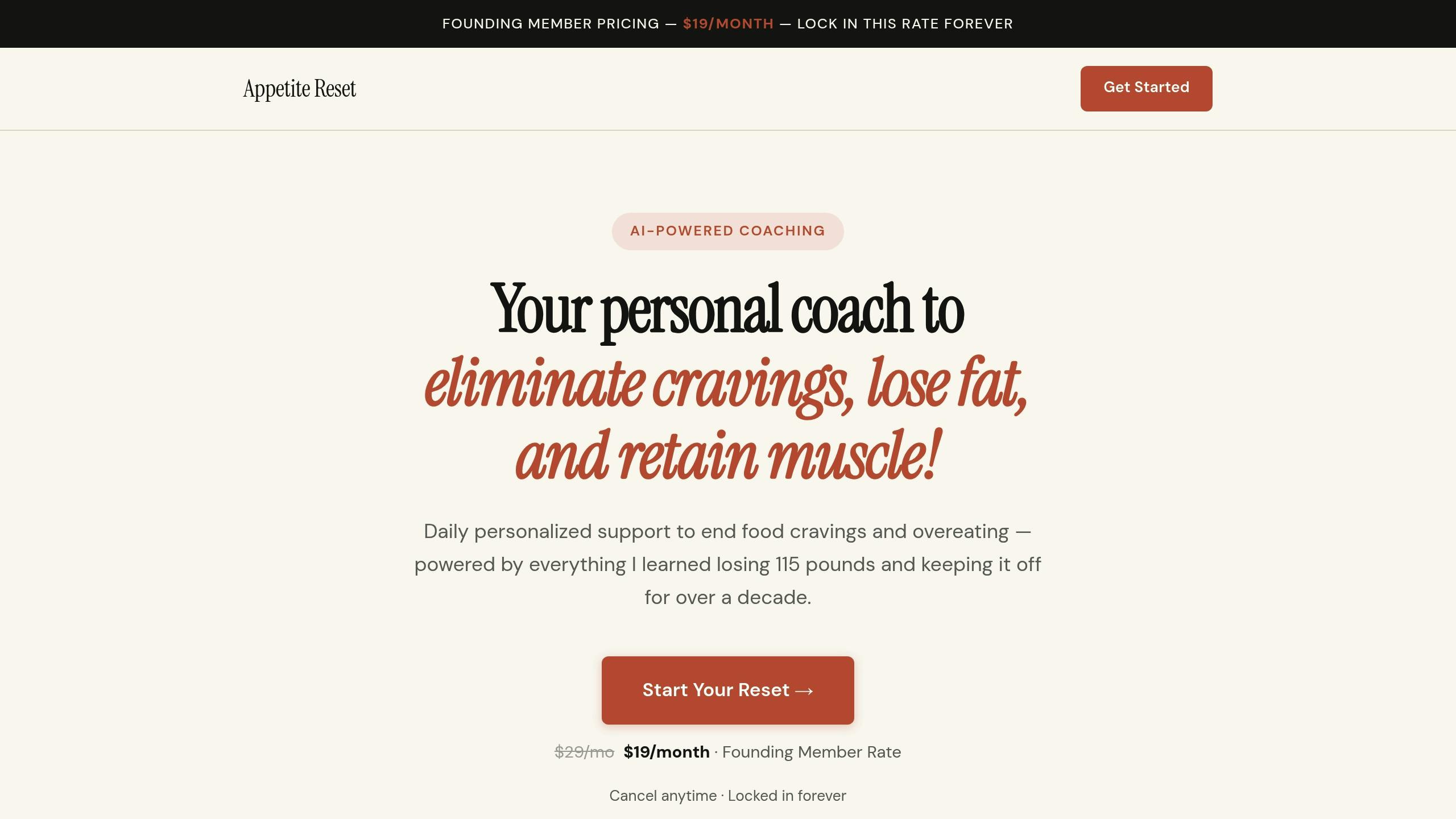
Staying consistent is much easier when you have the right support system in place. Appetite Reset offers 24/7 AI-powered coaching designed to help you manage cravings, recognize patterns, and recover from setbacks. With daily check-ins and progress tracking, the service helps you identify the root causes of cravings, whether it’s tied to specific times, emotions, or situations.
This personalized guidance is tailored to your unique challenges, offering real-time strategies to resist cravings and stay on track. When a craving hits, you can access instant support to help you push through instead of giving in. For founding members, the service is available for just $19/month (regular price $29/month), providing ongoing accountability and practical tools to help you succeed, even on tough days.
Conclusion
Losing fat while holding onto muscle requires a careful mix of strategies: maintaining a moderate calorie deficit, engaging in resistance training, and consuming a high-protein diet. Together, these steps signal your body to burn fat while protecting muscle tissue.
Here’s why muscle preservation matters: skeletal muscle burns about 6 calories per pound each day. Losing muscle during weight loss lowers your metabolic rate, making future fat loss more challenging and increasing the likelihood of regaining weight. Without a smart plan, a significant portion of weight loss could come from fat-free mass instead of fat.
“Losing fat without losing muscle is a challenging but achievable goal with the right approach. It requires the correct balance of training, nutrition, and recovery.”
– Chris Marshall, MSc, PT
Research backs this balanced approach. For instance, a 12-month study compared a severe 30% calorie deficit to a moderate 10% deficit. The severe deficit caused 1.5 times more lean mass loss and 2.5 times greater loss in bone mineral density. While crash diets might show quick results, they often come with side effects like hormonal imbalances, reduced performance, and a slower metabolism.
On the other hand, sustainable fat loss is achieved with a manageable calorie deficit of 500 to 750 calories per day. Pair this with enough protein (over 1.3 grams per kilogram of body weight), regular resistance training, quality sleep, and consistent progress tracking for long-term success .
FAQs
How can I get enough protein to maintain muscle while losing fat?
To ensure you’re getting enough protein while shedding fat, aim for 1.6 to 2.2 grams of protein per kilogram of body weight each day. The exact amount depends on your activity level and goals, but this range is key for maintaining muscle mass, especially when combined with resistance training.
Incorporate a mix of protein sources into your diet, including lean meats, eggs, dairy products, legumes, and plant-based alternatives. This approach helps you meet your protein needs without consuming excessive calories. Pair this with a moderate calorie deficit, about 500 to 750 calories per day to promote fat loss while preserving muscle.
Striking the right balance between protein intake, calorie control, and exercise can help you maintain muscle and achieve lasting fat loss.
What are the best workouts to keep muscle while losing fat?
To keep your muscle gains while shedding fat, focus on strength training exercises like weightlifting. Stick to a rep range of 8–12, using moderate to heavy weights, as this encourages both muscle growth and maintenance. Opt for joint-friendly movements like machine rows, leg presses, or dumbbell exercises to minimize fatigue and reduce injury risks.
Adding compound exercises such as squats, bench presses, and pull-ups, can be a game-changer since they work multiple muscle groups at once, making your workouts more efficient. The secret to seeing results? Consistency. Train each major muscle group 2–3 times a week to stay on track.
How does sleep affect fat loss and muscle maintenance?
Sleep plays an essential role in fat loss while preserving muscle. Getting enough quality sleep helps your body recover, promotes muscle growth, and supports the production of hormones that protect muscle tissue during a calorie deficit. It also keeps muscle protein synthesis (MPS) active and reduces muscle protein breakdown (MPB), making it easier to maintain muscle mass.
On the other hand, poor sleep can derail fat loss efforts. It can increase hunger, lead to overeating, and push your body toward losing muscle instead of fat. Experts generally advise aiming for 7–9 hours of quality sleep each night to maximize fat loss and muscle retention. When combined with resistance training and a well-rounded diet, good sleep habits become a powerful tool for achieving your fitness goals.
This is a really solid, no-drama checklist. I like that you kept it practical and balanced, especially the reminders about a moderate deficit, lifting as the anchor, and not letting cardio steal recovery. The emphasis on protein spread and sleep makes it feel sustainable, not like another crash plan.